Unraveling the Secrets of Deep Time with Ancient Biomolecules
Dr. Dale Greenwalt
Research Associate, Smithsonian Institution’s National Museum of Natural History
September 8, 2026
“When I first saw the fossil of a blood-engorged mosquito, it was one of the most interesting, amazing moments in my life—because I realized this was something that no one on the planet had ever seen before. I was the first human being to ever look upon a fossil of a blood-engorged mosquito.”
— Dr. Dale Greenwalt
Originally Published Under: Life Is A Story We Tell Ourselves
We long believed fossils were composed strictly of rock and minerals, all original molecular traces of life erased by millions of years of heat and pressure. We were wrong.
In this episode, paleobiologist Dr. Dale Greenwalt guides us through the revolutionary science of ancient biomolecules—pigments, proteins, and DNA preserved in the fossil record across tens of millions of years. From decoding how mammoths survived extreme Arctic cold to uncovering the true colors of dinosaur feathers, analyzing surviving biomolecules allows us to reconstruct the physiology, behavior, and evolutionary trajectories of extinct organisms like never before.
Key Takeaways from the Discussion
Beyond Stone and Bone: Fossils are not merely mineralized casts; fragile organic molecules can persist under unique geological conditions for tens of millions of years.
Paleogenomics & Proteomics: Analyzing fossilized proteins and pigments offers deep insights into physiological adaptations—such as cold-tolerance in prehistoric mammals and pigment-based mating displays in dinosaurs.
The Jurassic Park Parallels: Dr. Greenwalt shares his discovery of the first-ever blood-engorged mosquito fossil, demonstrating how ancient blood and molecular remnants can survive across geological deep time.
Evolutionary Deep Time: Tracing ancient viral genomes and molecular structures helps us understand how modern pathogens evolved and adapted over millions of years.
Full Episode Transcript:
unravelling-the-secret-of-life-with-ancient-biomolecules • 00:00
Hello, everyone, and welcome to the podcast. Life is a story we tell ourselves. I’m your host, Don Murphy. Joining us on this episode is Dr. Dale Greenwald to discuss his new book, Remnants of Ancient Life, The New Science of Old Fossils, who will also talk about the importance of biomolecules as a means for exploring the ancient past. Dale received his PhD in comparative biochemistry from Iowa State University and worked in the pharmaceutical industry for many years. However, the rest and best of the story comes after Dale retired and began volunteering for the National Museum of Natural History at the Smithsonian in Washington, D. C. There he worked for the past 15 years curating the fossil insect collections. He initiated the Kishunan Formation Fossil Insect Collection Project and has been responsible for all field work and curation of the collection and interaction with and reports to the U. S. Forest Service Dr. Greenwald has a long list of publications and patents. Dale, welcome to the program. Thank you for inviting me, Don. It’s a pleasure Yeah. So Dale, was there a particular occurrence or experience or epiphany that led to you um taking the life’s journey that you’re on now? As I think back on it, um yes, there were a couple of them. One a long time ago and and and one fairly recently. Perhaps the first was when I was very young in in my early teens when I visited my father’s workplace and and uh My father grew up in the depression and and when he got a job, he was deathly afraid that uh he might lose it. And so he kept this one miserable job that he had for his entire life working in a smoking, very unhealthy foundry environment. And the one and only time I visited his workplace, he told me that he never wanted me to work in such a place. And at that, you know, it I I decided at that point that I wanted eventually to get a job that was both um one that would allow me to work in a a healthy environment and in one that was uh would be intellectually stimulating. And so from that point on I I geared my education to uh going to college and and getting an advanced degree. And um I th I I I thank my father for making that comment some sixty years ago. It certainly has dictated the rest of my life. And more recently, and something that is more related to what we’re talking about today, when I first saw the fossil of a blood-engorged mosquito It was one of the most interesting, amazing moments in my life because I realized that this was something that no one on the planet had ever seen before. I was the first one to see a fossil of a blood engorged mosquito. And as I did research on that specimen, I um the last ten, twelve years of my life has been pretty much dictated by the fact that I found that uh that particular specimen that includes the publication of of of remnants of life. Those two events were uh Very, very important in my life. So what was so fascinating about finding a blood engorged um mosquito, why did it uh affect you so? And it it certainly harks back to and people are fairly familiar with with what you’re talking about because it was central to the story that Michael Crichton told in uh in Jurassic Park. What what went through your mind? I mean what w what was so fascinating about that? There were many things. The first was that I I In collecting specimens in the Kissine Formation, which is in northwestern Montana for 15 years, I knew that there were fossil mosquitoes there. In fact, it’s one of the best places in the world to collect fossil mosquitoes, but uh none of them were blood and gores. And we’ve all swatted, you know, mosquitoes in our life, and we realize how easily they can be squished when we hit them with our hand. One of my thoughts was, how could this possibly a blood-engorged mosquito with an abdomen blown up like a balloon? How could it possibly be preserved in rock as an intact specimen? And I wanted to find out. How it was preserved. I also knew that this was the first blood engorged mosquito fossil that had ever been found, and that because of Jurassic Park, uh just as you said, Don, it would get a lot of publicity. People would be asking, does it contain dino DNA, which of course it didn’t because it was twenty million years uh younger than the uh extinction of of the dinosaurs And so on a number of uh for a number of reasons it was it was very, very exciting. I understand. Well How so the other question that comes up every time we’re talking about fossils or uh ancient biomolecules is exactly how Did you find out how old this mosquito was? You were talking about it’s 20 million years younger. Um that sounds awfully exact. What do you do to find out how old these fossils actually are? When I retired uh fifteen years ago uh uh from you know thirty years of being a biochemist and started to become uh started to volunteer at the Natural History Museum, I was very aware of what I didn’t know. And and that’s one of the things I keep telling myself is I’m proud of the fact that I know what I don’t know, and I’m and I’m willing to admit that. I am not a geologist And the dating of the Kishinin formation was done certainly not by me, but by geologists who have been researching that area for the last half a century. And uh they uh simply looked at the various layers of rock and um knowing that certain species, uh particularly the the uh the the mammals that live there occurred During very finite periods of time, they were able to determine that These rocks were from what we call the the Middle Eocene, which is around fifty to say forty million years ago. Uh in addition, there are ways that a geologist can take uh minerals from the the rock and do um chemical analyses on them and determine uh what age they are. So this work is is uh was done by by other people, by geologists who know what they’re doing. And um the Kissini Information The oldest portions of it are are about 46 million years old, but the the the lake uh sediments accumulated for or some 10 million years thereafter, and and the youngest portions of it are are um maybe 35, 37 million years old. Now tell us where this uh formation is located. I think the the best way to answer that question is to talk about Glacier National Park. Most folks who hear the podcast will know where Glacier National Park is. It uh borders Canada, of course, up in the northwest portion of Montana. But the river, the Flathead River, forms the western boundary of Glacier National Park From Canada all the way down to the Bob Marshall Wilderness. And it is the Flathead River which is eroding its way through the sediments of this ancient lake And in some places exposing rock that contains fossils of organisms that lived back during the Middle Eocene And um it’s interesting in that there are some types of rocks that will preserve mammal bones, some types of rocks that will preserve For example, shells like clam or snail shells, and some types of rocks that will preserve insects And the formation is, I think, at this point and in the future will be most famous for its beautifully, exceptionally well-preserved insects. Well, you talked about preservation. It’s a interesting segue to mention as an aside how important it is to preserve. state and national parks and in this case national forests because they’re tremendous uh repositories of information, scientific information I know your book talks about information that was found out at Yellowstone National Park and certainly at other national parks around the country and around the world for that matter. They’re great uh repositories of scientific information and preserving them for future generations is not only important for recreation and enjoyment of their scenic beauty, but for the scientific information that they will yield as well. So really appreciate the work that you were able to do there. Blood engorged mosquitoes, talking about blood, that must have led you to this fascination that you have with Biomolecules. So how did this blood that was preserved for millions of years inside this ancient mosquito lead you to such an interest in in biomolecules. It’s a, as you say, on an interesting story. The paper that was published on the blood engorged mosquito Which presented data that definitively identified certain parts of the hemoglobin molecule still within the abdomen of the mosquito. When that paper was published, uh there was quite a bit of publicity. And uh about a year after that, I was contacted by a couple of young uh academics who wanted to publish a two volume book about the fossil record of uh parasites and parasitism, believe it or not, you wouldn’t think that there would be a fossil record of parasitism, but it it’s actually quite good. They wanted me to write a chapter on fossil blood. And so I did that. And during my research uh in preparation uh for the for the uh writing of that chapter I delved into the the the vast amount of work that has been done in the recent past by people who have identified not just uh ancient blood molecules but ancient biomolecules other than than blood. And and and and let me define here a biomolecule is simply a a a molecule that is unique to living organisms and is required for the function of those living organisms. And as you mentioned earlier, Don, examples are DNA, proteins, pigments. uh structural molecules like cellulose. And after I uh after that chapter was published, I began to think that Wow, there might be enough material here for a book. But even more importantly was that I was absolutely fascinated by the preservation. of biomolecules in in these rocks. I mean rocks are supposed to be, excuse me, fossils are supposed to be uh you know, totally mineralized and and and they’re made of rocks and and the biomolecules were supposed to have been degraded You know, millions and millions of years ago. And so I um convince myself that if I was interested in this, if I found this fascinating, well then the late public would also find it fascinating. And so That led to the to the writing of remnants of ancient life, which is directed at the uh at the lay public. It’s not meant to be a technical academic book. I really wanted to let the lay public know about all these fascinating biomolecules that were out there. All right. Well let’s talk about a b one biomolecule in in particular you already mentioned the hemoglobin, but let’s focus on uh heme um which of course is a subset of the entire molecule of of hemoglobin and What you found out, what you were able to extract the information, the biological information, you were able to extract from the blood that remained in that mosquito for millions of years. I mean it’s just totally mind blowing. So could you maybe Let our listeners know exactly what you found out with respect to the biomolecules that remained in that blood. Of course. So the hemoglobin molecule is responsible for for carrying oxygen in our uh blood in our circulatory system. And most of hemoglobin is a protein. And um It depends, however, on other non-proteinaceous molecules to actually carry the oxygen and and and and those molecules which are not proteins carry oxygen via their binding to to iron And so you have the large hemoglobin protein made of protein, and within each human, excuse me, within each hemoglobin molecule, there are four heme moieties and each hemeiety has one atom of iron. And so I knew that perhaps the the first thing we should analyze for would be the iron because That would be easy to find and if there was an abnormally high level of iron, that would suggest that uh a a larger portion of the hemoglobin hemoglobin prote uh excuse me molecule was still there. And so that was relatively easy to do with the help of the Mineral Sciences Department at the Natural History Museum. We found immediately that the abdomen of the blood and gorge mosquito contained really, really high levels of iron. And uh as we had a a beautiful control because we had um Other mosquitoes which were not blood-engorged, and they did not have these high levels of iron. And in fact Even other portions of the mosquito that was blood engorged, for example, the head or the um the wings. uh were very low in iron. So the high iron content was very specific to this dark material that was in the abdomen of the blood and gorge mosquito We did not find any hints of the protein being preserved. But the very fact that we could prove definitively that the heme molecule with its iron was still there was enough to prove that these were in fact blood and gorge mosquitoes. Hmm. That’s just absolutely that’s just absolutely fascinating that you were able to extract that kind of uh information from the from the mosquito. And for our listeners, just for a little bit of context, you If you see rust uh anywhere on iron, uh you know that it it has a reddish, a dark reddish color. And that’s um an an oxide of of iron or iron oxide. And it’s actually the same thing that’s inside the uh blood engorged uh mosquito. Iron binds oxygen uh readily and that’s why you get rust on on iron. And so that’ll give you a little bit of context of of of what we’re talking about here. It’s just absolutely fascinating. The miracle of hemoglobin is that it can bind iron and then it can release it. And so in our circulatory system It binds iron in in the lungs and releases the oxygen at uh um various parts of of our body as as needed. And and there’s an interesting story about that in the book. uh about research that was done by people looking at the hemoglobin of of mammoths and how uh tightly uh or loosely it it bound antigen relative today’s, for example, African elephants Right, and you can get a uh build a a relationship and that that’s a good segue to talk about why these biomolecules are are important. So when we talk about Dinosaurs and we talk about modern uh animals and we talk about taxonomy and phylogeny you know, we’re really talking about morphology and structure and when we try to piece together the connections that go from now and animals that exist now all the way back to their ancestry millions of years ago. But now what’s important is you have these biomolecules, these biomolecules that you can use instead of morphology or s you know, the structure of the bones and that sort of thing, which you usually look at That’s just revolutionary, isn’t it? I mean this is new science. Oh absolutely. Uh the Morphology has carried the science of paleobiology a long, long way for the last uh couple of hundred years. But now there’s this realization that Uh within what we used to think was 100% rock, there are biomolecules that we can use uh to tell us a number of things about the um ancient organisms that uh are now law long extinct and and Some of these biomolos molecules can can tell us what type of behavior these organisms had. Some There is one particular protein that is sexually dimorphic and If if the only specimen you had was a tiny little piece of bone, if you could extract that protein, you could determine uh if that piece of bone came from a male or female organism, something that you could never do based just on the structure of that specimen. So when you say sexually dim when you say sexually dimorphic, you mean that some of these biomolecules are are sex linked. In other words, they’re on uh the sex chromosome of a particular animal and and if you can l extract that particular molecule you will know whether it came from a male or a female. Is that what you’re saying? Actually, in this case, Don, the the female protein has a slightly different sequence. Than the male protein. And so uh when you sequence the protein, the sequence itself the uh order of the subunits of the protein that go into this long little beads on a string structure that uh proteins have um the this the sequence of those subunits is is uh specific to the to the sex of the organism Wow. So it’s absolutely fascinating. But you just mentioned, you know, something I think that’s also mind-blowing that you can use these biomolecules to uh determine the behavior of uh a particular species uh long ago. Tell us how that works. Well there’s a number of ex uh examples and um for example there is a uh three hundred and forty million year old crinoid. Crinoids are uh marine organisms lived in the ocean and they are very closely related to today’s starfish uh and feather stars the echinoderms and um a pigment has been isolated From fossil crinoids that are hundreds of millions of years old That pigment is is bright red. And what it tells us is that these organisms, uh, what what color these organisms were. And that they lived in an environment where they were probably using the pigment to warn potential predators away because the pigment not only is red, but it’s toxic And so the the organism living at the bottom of the ocean uh was not mobile. It was attached very firmly to the to the bottom of the sea. And so it was very susceptible to predation. Um but it had evolved this this toxic pigment that uh again was not only toxic but it was bright red to warn away predators. And so that’s that that’s one example of how a pigment can tell us in this case that uh prine uh the uh prinoids use these these pigments to to warn away potential predators Um another example, uh and and this is uh uh I I I like this particular example because it’s really very simple And and it involves a uh a bacterium, Ursenia pestis, which is the cause of the Black Death or the Black Plague that uh so uh was so terrible back in the uh the early middle ages. The the bacterium has been found in human bones uh that are 500 years old, a thousand years old, two thousand, three thousand, four thousand, five thousand years old. And the sequence of the DNA in that bacterium Demonstrated that about 3,000 years ago, about 1,000 BC, there was a single mutation And that uh prior to that mutation, the bacterium really was uh did not cause a serious disease. But around a thousand years ago, there was this one single mutation in the DNA of this bacterium. That allowed it to dissolve blood clots in people who were infected with the bug. And As a result, it was able to circulate throughout the entire body of its host, the uh the person infected And so it became much more virulent and led to what we now know as the Black Plague. And so this is an example of a single mutation that was responsible for the evolution of this bacterium. From a uh relatively um innocuous organism to one that caused literally tens of millions, if not hundreds of millions, of of of deaths uh during the Middle Ages. And so while that was extremely deleterious and and harmful to to human beings, that single mutation in the bacterium afforded that bacterium a tremendous advantage for survival and reproduction And that can be scaled up. That happens even on a grand scale with something as as large as a mammoth that might have to adapt to the cold a single mutation in one gene can um perhaps cause more hair to grow on the foot pads of a uh particular uh species like like a mammoth and give it an advantage uh in the cold and then that advantage is passed on to future generations of of mammoths and their survivability is increased and It’s just a wonderful example of of how of not only evolution takes place, but also the etiology of diseases and how diseases can spread. uh from a single mutation that gives a bacterium a a particular advantage. And that just teaches us uh so much more uh about how even diseases um advance uh evolutionarily absolutely and and and the example of the of the mammoth is one of my favorites because in that uh uh situation scientists were able to uh recover genetic material from a mammoth that had been dug out of permafrost in in Siberia. And The once they had the the DNA sequence of the mammoth’s hemoglobin, they were actually able to use um lab laboratory techniques to synthesize the actual protein. So what they had in their test tube, so to speak, in their laboratory. was mammoth hemoglobin. And once they made mammoth hemoglobin, they were able to test it to see how it compared to, for example, African elephant. uh hemoglobin. And what they were able to show was that a mutation made it much easier for the mammoth to release oxygen in the peripheral circulation of of the uh of the mammoth. And so uh you know living in an ice age it’s very important to keep your feet warm and that was the exact function of this particular mutation Fascinating. Well, there are so many biomolecules to talk about that and uh in in your books, I really encourage uh people to to pick up a copy of your book. But one particular protein that for me was fascinating that you talked about was opsin, which has to do with color vision. And you you talk about that quite a bit in in your your book and the perception uh of color and how that evolved um over eons And I have some, it leads to some philosophical questions too as to whether or not animals perceive color or react to color. the same as human beings do or get the same feeling. So they’re let me put a finer point on on the question because it’s a little weird question that I that popped into my mind. So there’s this philosophical concept that’s known as qualia. And philosophers use it to describe the nature or content of our subjective experiences. So my question has to do with there’s this biomolecule opsin that you talk about in your book That gives color vision. And then paleobiologists draw certain conclusions about what the perception of color meant to the animals. But then my question is how much are we ascribing human reactions to color to to these animals? Or is there some anthropomorphizing going on? when we try to understand how uh ancient speech Is might have used color vision. I know it’s kind of a convocated complicated question, but it just occurred to me that that that’s that that has to be something you would consider as a billionabile. Yeah, that whole area, Don, is is I’m glad you brought this up because it’s really fascinating. Um we have to ask ourselves the question, uh if in fact Organisms could not see colors. There really would be no need for colors. And in fact, the evolution of color vision occurred really, really early. In the evolution of complex organisms. Well over 500, 600 million years ago, organisms had color vision. And the example of the uh of the red crinoid. Um you know, I I I don’t think there’s any chance here that we could be accused of Of being anthropomorphic when we talk about a crinoid advertising its toxicity to potential predators. So, yeah, the the the presence of pigments combined with the ability of organisms to see those pigments uh creates you know an infinite number of of interesting stories. Camouflage, you know, is is very important to and even to the dinosaurs. And there is a lot of evidence now that many of the dinosaurs which were subject to predation were camouflage and they used different colors uh uh to uh provide that uh that camouflage and obviously um If you that tells us something again about the behavior of the organisms, if if if s something is is is well camouflaged, it uh for example may in fact be pretty slow. It didn’t have to run very fast. It relied on its camouflage to escape predators. Um y you can go in all kinds of of different directions. uh when we start talking about uh colors and pigments in in in the fossil record is fascinating Yeah. Absolutely. Well, that leads to the particular pigment that is well known, at least amongst human beings, and that’s melanin. And you talk in your book a great deal about uh the evolution, the development of that particular biomolecule, that particular protein. It’s a pigment. Um can you talk about the role of of melanin? It it played it seemed a a huge role um in the evolution and the development of all life on on Earth It’s it’s it’s a a very important compound all across the diversity of life. Um the first fossil record of melon itself is uh something like Over 300 million years old. Melanin was isolated and and uh proven to exist. In the uh ink sack of a fossil squid. Uh again, a situation where that tells us that the squid was using this black pigment, melanin, as a defense. It would spray the black pigment out just as living cephalopods do today to create a a uh a black cloud that would allow them to escape to escape from predators. And the fossil record of melanin obviously is present in um large numbers of uh of uh of organisms. It has not been um isolated from uh very many dinosaurs, however, and Uh we know now that dinosaurs had feathers. We know that those feathers were colored uh and uh they contained melan melanin, but it was not because we were able to isolate the actual biochemical melanin. Rather we were able to visualize the little packet-like structures that stored the melanin. And there’s a lot of research which indicates the different size of these little storage packets uh can be related to the type of melanin stored and um which and different types of melanin of course dictate uh different colors. So yeah the it One er everything that we all one thing that we all want to know here is is uh what colors uh um were the dinosaurs. And there’s a lot of information that some of them were very, very brightly colored with bright red and and uh other types of uh Uh colors. But you haven’t uh recovered any actual dinosaur pigments, is that right? Not from the dinosaurs, but uh we have been able to recover it from from uh from other organisms Understand. So the other biomolecule that’s extremely important that you talk about in the in the book is collagen. And Most of our listeners will know they see collagen advertised on television as almost a cure-all for every joint in your body. So people know collagen uh is important in in that respect, but as a biomolecule and telling us about what happened in ancient times and how organisms may have b behaved. Collagen, there’s something called collagen fingerprinting. Can you tell us about that, how that developed? Because that’s a fascinating story and it it actually is a powerful tool now that’s also used in trying to determine and and understand how life evolved and the structure of particular species in in in ancient times. How does this collagen fingerprinting work? It’s a fascinating technique that was developed by a laboratory in England. um an an individual uh by the name of Mike Buckley and and uh his colleagues. Collagen, of course, there are a dozen different types of collagen, and they comprise most of the mass of uh things like uh ligaments and and and tendons and they’re essential for life. they uh are sens uh essentially responsible for connecting the bones to muscles. And of course if that connection didn’t exist uh we would simply be uh A flat round blob on the surface of the ground. So what Mike did was he developed a technique where he could take a bone and extract from that bone a particular type of collagen Now these bones, uh the oldest of these bones is about uh uh uh a million uh years old or so, but that gives us a lot of of time, particularly important time, because it is within that time period that that our own species evolve. But uh what Mike did was develop a technique whereby he could take that collagen. He didn’t have to sequence it, but he could just fragment it And and separate the different fragments of collagen based on size, and uh that pattern of size fragments would uh make a fingerprint that was specific to different organisms. So the uh the array of collagen fragments from a pig would look different from the array of collagen fragments from a deer, for example. Now this is particularly important When you are an anthropologist or a paleontologist and you’re digging in the floor of a cave where a hundred thousand years ago uh uh humans lived or Neanderthals lived Um and you harvest, you dig up literally hundreds and hundreds, maybe thousands of different tiny bone fragments. And these bone fragments really don’t have very much morphological information to provide. And so it’s very frustrating because you have all these little bone fragments, but you don’t know where they came from. But what you can do is very quickly analyze each of these tiny fragments for a collagen fingerprint and you can tell very quickly what organism these bone fragments belong to. And so you can uh it it tells us a lot about the diet of the nut of the Neanderthals. what um organisms they were hunting and and consuming. And and it’s it is a technique now that is is used universally by uh anthropologists and paleobiologists throughout the world because the you know the the the world’s museums are have have literally tens of thousands of drawers that are filled with tiny bone fragments and no one knows what organism they came from. And here’s a technique where we can very quickly and very definitively identify the organism from which these bone fragments came from. Yes. That’s just absolutely uh fascinating this this story. So Dale You know, maybe you can can share with our our listeners what you think this revolution is going to lead to. I mean now we have this this tremendous technique of biomolecules and analysis of of biomolecules and they’re telling a a story. What What new have we learned so far, and what have we yet to learn that you think these biomolecules will reveal to us? One of the more interesting things about reading the literature is um Papers which extend the age of specimens wherein we can find biomolecules. Um biomolecules are usually very, very fragile. Uh they degrade very quickly And and different types of biomolecules are more fragile than others. So for example, the oldest DNA is less than two million years old. The oldest protein is just slightly less than four million years old But when we get into less complex biomolecules like melanin or the red pigment of the crinoid, now we’re talking about small biomolecules that can uh uh exist for literally hundreds of millions of years So um the younger the specimens are, the more likely we are able to extract DNA and proteins, which which are of course genetic material, and they can tell us so much about in organism. What once we can sequence, and in many cases we have in fact sequenced the entire genome of a fossil organism. That is every DNA molecule that ever existed in that organism uh you know it’s kitty bar the door in terms of what we can find out about that organism. So it’s kind of a race, you know, uh where we’re trying to find DNA and proteins in older and older rocks in older and older specimens. And it’s interesting to see um reports of uh the ages as they are extended deep into into time. I believe very firmly that uh we will eventually be able to extract DNA proteins from far older animals and um This is going to provide us with a a huge wealth of of information about extinct organisms that that lived before uh long, long before uh uh primates uh even evolve. But to me the most exciting part of of uh ancient biomolecules is is not in the preservation of the actual biomolecules, but something called um ancestral sequence reconstruction where we can study how mutations occur in what patterns they occur in, what residues are most likely to be mutated, and using computer algorithms we can predict the sequence of ancient proteins in the absence of of any fossil remains And uh the the scientists who have developed and who are improving this these techniques uh are opening up a fascinating area whereby we can predict what proteins uh were like Literally hundreds of millions of years ago, a good example is you know, a lot of people believe that life evolved near or in hydrothermal vents in mid-oceanic ridges Uh I think most of us uh have heard of the black smokers, uh these uh vents Where um in in the middle of the ocean, which are are are venting um steam from the interior of the earth And people believe, well, that it’s a very rich environment with with a lot of nutrients and and whatnot, but it was very, very hot. And if in fact life had evolved in those vents, those organisms would have uh must have been able to tolerate really high temperatures. And what scientists have done is they’ve taken proteins from living organisms that work best at you know uh our room temperature And they have predicted what the sequence of the protein would be in organisms that would have to have lived in these idothermal vents. And when they put these proteins to together and they sequence them and they synthesize them and and and they uh test them in the lab. Lo and behold, it shows that these ancient organisms or these ancient proteins that have been predicted by computer algorithms do in fact um function very nicely in boiling water. And so these um these techniques can open up uh vast amounts of of information in in the total absence of the fossils themselves Well, you know, that that is so mind-blowing because you think about time machines and we’re always talking about you know traveling into the future, traveling into the past. And so now you know, instead of predicting the future, we can use these techniques to predict the past. I mean, is It’s hard to wrap your mind around it. That’s just that’s just mind blowing. Yeah, I c I I uh I can’t wait. uh uh to to see what new information will be uh gleamed from the from the fossil record and from the uh ancestral sequence uh reconstruction in in the in the future. In the near future. I mean, this new science is really uh growing exponentially and and and interestingly it is attracting y young scientists to the field And uh I I think that is just really, really cool that the the uh uh the younger scientists are realizing the potential of an biomolecules uh to tell them uh things in addition to what uh simple morphology can. So yeah, the future is going to be very, very exciting for uh Paleobiologist. Right. Well, I we could talk about this all day. And there’s so many more. There’s so many more biomolecules to uh to talk about, but This being life is a story we tell ourselves podcast. I I always try to wrap up by by asking kind of a transcendental question. And and so in all of this Journey that you’ve taken into paleobiology and into biomolecules. Has there been some event or something that’s happened to you? uh that uh that you would characterize as as transcendent and that changed you in some way that you never imagined you’d be changed as a human being Whether it be spiritually, physically, or or just psychologically. Uh boy that’s a uh a a tough question. Um I have been exceedingly lucky and I am very thankful that I was given the opportunity to work as a volunteer in the Paleobiology Department of the Natural History Museum in Washington, D. C. I I started out as a volunteer, but I was able eventually to pack my way into an independent project, which in fact was uh the collection of the uh insects from uh northwestern Montana and I’ve been doing that now for fifteen years and um I will certainly uh I have every intention of continuing to do this as as long as I live. And the the the the reason is, well there are many different reasons, but one of the most uh interesting reasons is that when I’m out collecting and you can imagine yourself sitting near the river And you get a piece of rock and you take a rock hammer and you split it. At that very moment, when you split that rock, I am revealing something that has the potential of being totally new, unknown to the human race. No one else in the world has seen what I am about to see when I split that rock and see what’s there. And that is the thing that keeps me coming back And uh, you know, because it could be something as interesting as an organism That contains biomolecules and opens so many different avenues to our ability to understand uh early life on uh on this on this planet. Um it is is something that is very unique and uh I think something that perhaps all of us Aspire to see something that no one else in the world has ever seen, to do something that no one else in the world has ever done. Well, Dale, this has been a fascinating conversation and not only that, it’s it’s been inspiring, I mean, to think that uh you’ve done all of this in retirement. So All of you retirees who are out there listening, life is just beginning at retirement. I think that’s the lesson that we can take from this, and there’s so much you can accomplish in in your life uh after you’ve retired and so many contributions uh that you can make and Dale We certainly appreciate the contributions that that you’ve made in the tremendous discovery and directing paleobiology into an entirely new and revolutionary uh direction. Dale, thank you for joining us and I’m sure there’s another book in you uh that will uh be coming out soon. Thank you, Dale. You’re very welcome, Don. I appreciate the opportunity. Thank you for joining. This episode of Life is a story we tell ourselves. You’ve been listening to the scientist and author Dale Greenwald discuss his new book, Remnants of Ancient Life. If you would like to learn more, you can subscribe to the podcast at LifeisA Story Podcast. com. Don’t forget to hit that like button and leave comments or questions for Dr. Greenwald. Be well, share happiness, and remember, never stop questioning. Curiosity has its own reason for existing
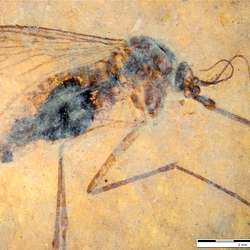
Fossil specimen of a blood-engorged mosquito preserved in shale,


Nature and Science Podcast
Unraveling the Secrets of Deep Time with Ancient Biomolecules
Dr. Dale Greenwalt
Research Associate, Smithsonian Institution’s National Museum of Natural History
September 8, 2026
“When I first saw the fossil of a blood-engorged mosquito, it was one of the most interesting, amazing moments in my life—because I realized this was something that no one on the planet had ever seen before. I was the first human being to ever look upon a fossil of a blood-engorged mosquito.”
— Dr. Dale Greenwalt
Originally Published Under: Life Is A Story We Tell Ourselves
We long believed fossils were composed strictly of rock and minerals, all original molecular traces of life erased by millions of years of heat and pressure. We were wrong.
In this episode, paleobiologist Dr. Dale Greenwalt guides us through the revolutionary science of ancient biomolecules—pigments, proteins, and DNA preserved in the fossil record across tens of millions of years. From decoding how mammoths survived extreme Arctic cold to uncovering the true colors of dinosaur feathers, analyzing surviving biomolecules allows us to reconstruct the physiology, behavior, and evolutionary trajectories of extinct organisms like never before.
Key Takeaways from the Discussion
Beyond Stone and Bone: Fossils are not merely mineralized casts; fragile organic molecules can persist under unique geological conditions for tens of millions of years.
Paleogenomics & Proteomics: Analyzing fossilized proteins and pigments offers deep insights into physiological adaptations—such as cold-tolerance in prehistoric mammals and pigment-based mating displays in dinosaurs.
The Jurassic Park Parallels: Dr. Greenwalt shares his discovery of the first-ever blood-engorged mosquito fossil, demonstrating how ancient blood and molecular remnants can survive across geological deep time.
Evolutionary Deep Time: Tracing ancient viral genomes and molecular structures helps us understand how modern pathogens evolved and adapted over millions of years.
Full Episode Transcript:
unravelling-the-secret-of-life-with-ancient-biomolecules • 00:00
Hello, everyone, and welcome to the podcast. Life is a story we tell ourselves. I’m your host, Don Murphy. Joining us on this episode is Dr. Dale Greenwald to discuss his new book, Remnants of Ancient Life, The New Science of Old Fossils, who will also talk about the importance of biomolecules as a means for exploring the ancient past. Dale received his PhD in comparative biochemistry from Iowa State University and worked in the pharmaceutical industry for many years. However, the rest and best of the story comes after Dale retired and began volunteering for the National Museum of Natural History at the Smithsonian in Washington, D. C. There he worked for the past 15 years curating the fossil insect collections. He initiated the Kishunan Formation Fossil Insect Collection Project and has been responsible for all field work and curation of the collection and interaction with and reports to the U. S. Forest Service Dr. Greenwald has a long list of publications and patents. Dale, welcome to the program. Thank you for inviting me, Don. It’s a pleasure Yeah. So Dale, was there a particular occurrence or experience or epiphany that led to you um taking the life’s journey that you’re on now? As I think back on it, um yes, there were a couple of them. One a long time ago and and and one fairly recently. Perhaps the first was when I was very young in in my early teens when I visited my father’s workplace and and uh My father grew up in the depression and and when he got a job, he was deathly afraid that uh he might lose it. And so he kept this one miserable job that he had for his entire life working in a smoking, very unhealthy foundry environment. And the one and only time I visited his workplace, he told me that he never wanted me to work in such a place. And at that, you know, it I I decided at that point that I wanted eventually to get a job that was both um one that would allow me to work in a a healthy environment and in one that was uh would be intellectually stimulating. And so from that point on I I geared my education to uh going to college and and getting an advanced degree. And um I th I I I thank my father for making that comment some sixty years ago. It certainly has dictated the rest of my life. And more recently, and something that is more related to what we’re talking about today, when I first saw the fossil of a blood-engorged mosquito It was one of the most interesting, amazing moments in my life because I realized that this was something that no one on the planet had ever seen before. I was the first one to see a fossil of a blood engorged mosquito. And as I did research on that specimen, I um the last ten, twelve years of my life has been pretty much dictated by the fact that I found that uh that particular specimen that includes the publication of of of remnants of life. Those two events were uh Very, very important in my life. So what was so fascinating about finding a blood engorged um mosquito, why did it uh affect you so? And it it certainly harks back to and people are fairly familiar with with what you’re talking about because it was central to the story that Michael Crichton told in uh in Jurassic Park. What what went through your mind? I mean what w what was so fascinating about that? There were many things. The first was that I I In collecting specimens in the Kissine Formation, which is in northwestern Montana for 15 years, I knew that there were fossil mosquitoes there. In fact, it’s one of the best places in the world to collect fossil mosquitoes, but uh none of them were blood and gores. And we’ve all swatted, you know, mosquitoes in our life, and we realize how easily they can be squished when we hit them with our hand. One of my thoughts was, how could this possibly a blood-engorged mosquito with an abdomen blown up like a balloon? How could it possibly be preserved in rock as an intact specimen? And I wanted to find out. How it was preserved. I also knew that this was the first blood engorged mosquito fossil that had ever been found, and that because of Jurassic Park, uh just as you said, Don, it would get a lot of publicity. People would be asking, does it contain dino DNA, which of course it didn’t because it was twenty million years uh younger than the uh extinction of of the dinosaurs And so on a number of uh for a number of reasons it was it was very, very exciting. I understand. Well How so the other question that comes up every time we’re talking about fossils or uh ancient biomolecules is exactly how Did you find out how old this mosquito was? You were talking about it’s 20 million years younger. Um that sounds awfully exact. What do you do to find out how old these fossils actually are? When I retired uh fifteen years ago uh uh from you know thirty years of being a biochemist and started to become uh started to volunteer at the Natural History Museum, I was very aware of what I didn’t know. And and that’s one of the things I keep telling myself is I’m proud of the fact that I know what I don’t know, and I’m and I’m willing to admit that. I am not a geologist And the dating of the Kishinin formation was done certainly not by me, but by geologists who have been researching that area for the last half a century. And uh they uh simply looked at the various layers of rock and um knowing that certain species, uh particularly the the uh the the mammals that live there occurred During very finite periods of time, they were able to determine that These rocks were from what we call the the Middle Eocene, which is around fifty to say forty million years ago. Uh in addition, there are ways that a geologist can take uh minerals from the the rock and do um chemical analyses on them and determine uh what age they are. So this work is is uh was done by by other people, by geologists who know what they’re doing. And um the Kissini Information The oldest portions of it are are about 46 million years old, but the the the lake uh sediments accumulated for or some 10 million years thereafter, and and the youngest portions of it are are um maybe 35, 37 million years old. Now tell us where this uh formation is located. I think the the best way to answer that question is to talk about Glacier National Park. Most folks who hear the podcast will know where Glacier National Park is. It uh borders Canada, of course, up in the northwest portion of Montana. But the river, the Flathead River, forms the western boundary of Glacier National Park From Canada all the way down to the Bob Marshall Wilderness. And it is the Flathead River which is eroding its way through the sediments of this ancient lake And in some places exposing rock that contains fossils of organisms that lived back during the Middle Eocene And um it’s interesting in that there are some types of rocks that will preserve mammal bones, some types of rocks that will preserve For example, shells like clam or snail shells, and some types of rocks that will preserve insects And the formation is, I think, at this point and in the future will be most famous for its beautifully, exceptionally well-preserved insects. Well, you talked about preservation. It’s a interesting segue to mention as an aside how important it is to preserve. state and national parks and in this case national forests because they’re tremendous uh repositories of information, scientific information I know your book talks about information that was found out at Yellowstone National Park and certainly at other national parks around the country and around the world for that matter. They’re great uh repositories of scientific information and preserving them for future generations is not only important for recreation and enjoyment of their scenic beauty, but for the scientific information that they will yield as well. So really appreciate the work that you were able to do there. Blood engorged mosquitoes, talking about blood, that must have led you to this fascination that you have with Biomolecules. So how did this blood that was preserved for millions of years inside this ancient mosquito lead you to such an interest in in biomolecules. It’s a, as you say, on an interesting story. The paper that was published on the blood engorged mosquito Which presented data that definitively identified certain parts of the hemoglobin molecule still within the abdomen of the mosquito. When that paper was published, uh there was quite a bit of publicity. And uh about a year after that, I was contacted by a couple of young uh academics who wanted to publish a two volume book about the fossil record of uh parasites and parasitism, believe it or not, you wouldn’t think that there would be a fossil record of parasitism, but it it’s actually quite good. They wanted me to write a chapter on fossil blood. And so I did that. And during my research uh in preparation uh for the for the uh writing of that chapter I delved into the the the vast amount of work that has been done in the recent past by people who have identified not just uh ancient blood molecules but ancient biomolecules other than than blood. And and and and let me define here a biomolecule is simply a a a molecule that is unique to living organisms and is required for the function of those living organisms. And as you mentioned earlier, Don, examples are DNA, proteins, pigments. uh structural molecules like cellulose. And after I uh after that chapter was published, I began to think that Wow, there might be enough material here for a book. But even more importantly was that I was absolutely fascinated by the preservation. of biomolecules in in these rocks. I mean rocks are supposed to be, excuse me, fossils are supposed to be uh you know, totally mineralized and and and they’re made of rocks and and the biomolecules were supposed to have been degraded You know, millions and millions of years ago. And so I um convince myself that if I was interested in this, if I found this fascinating, well then the late public would also find it fascinating. And so That led to the to the writing of remnants of ancient life, which is directed at the uh at the lay public. It’s not meant to be a technical academic book. I really wanted to let the lay public know about all these fascinating biomolecules that were out there. All right. Well let’s talk about a b one biomolecule in in particular you already mentioned the hemoglobin, but let’s focus on uh heme um which of course is a subset of the entire molecule of of hemoglobin and What you found out, what you were able to extract the information, the biological information, you were able to extract from the blood that remained in that mosquito for millions of years. I mean it’s just totally mind blowing. So could you maybe Let our listeners know exactly what you found out with respect to the biomolecules that remained in that blood. Of course. So the hemoglobin molecule is responsible for for carrying oxygen in our uh blood in our circulatory system. And most of hemoglobin is a protein. And um It depends, however, on other non-proteinaceous molecules to actually carry the oxygen and and and and those molecules which are not proteins carry oxygen via their binding to to iron And so you have the large hemoglobin protein made of protein, and within each human, excuse me, within each hemoglobin molecule, there are four heme moieties and each hemeiety has one atom of iron. And so I knew that perhaps the the first thing we should analyze for would be the iron because That would be easy to find and if there was an abnormally high level of iron, that would suggest that uh a a larger portion of the hemoglobin hemoglobin prote uh excuse me molecule was still there. And so that was relatively easy to do with the help of the Mineral Sciences Department at the Natural History Museum. We found immediately that the abdomen of the blood and gorge mosquito contained really, really high levels of iron. And uh as we had a a beautiful control because we had um Other mosquitoes which were not blood-engorged, and they did not have these high levels of iron. And in fact Even other portions of the mosquito that was blood engorged, for example, the head or the um the wings. uh were very low in iron. So the high iron content was very specific to this dark material that was in the abdomen of the blood and gorge mosquito We did not find any hints of the protein being preserved. But the very fact that we could prove definitively that the heme molecule with its iron was still there was enough to prove that these were in fact blood and gorge mosquitoes. Hmm. That’s just absolutely that’s just absolutely fascinating that you were able to extract that kind of uh information from the from the mosquito. And for our listeners, just for a little bit of context, you If you see rust uh anywhere on iron, uh you know that it it has a reddish, a dark reddish color. And that’s um an an oxide of of iron or iron oxide. And it’s actually the same thing that’s inside the uh blood engorged uh mosquito. Iron binds oxygen uh readily and that’s why you get rust on on iron. And so that’ll give you a little bit of context of of of what we’re talking about here. It’s just absolutely fascinating. The miracle of hemoglobin is that it can bind iron and then it can release it. And so in our circulatory system It binds iron in in the lungs and releases the oxygen at uh um various parts of of our body as as needed. And and there’s an interesting story about that in the book. uh about research that was done by people looking at the hemoglobin of of mammoths and how uh tightly uh or loosely it it bound antigen relative today’s, for example, African elephants Right, and you can get a uh build a a relationship and that that’s a good segue to talk about why these biomolecules are are important. So when we talk about Dinosaurs and we talk about modern uh animals and we talk about taxonomy and phylogeny you know, we’re really talking about morphology and structure and when we try to piece together the connections that go from now and animals that exist now all the way back to their ancestry millions of years ago. But now what’s important is you have these biomolecules, these biomolecules that you can use instead of morphology or s you know, the structure of the bones and that sort of thing, which you usually look at That’s just revolutionary, isn’t it? I mean this is new science. Oh absolutely. Uh the Morphology has carried the science of paleobiology a long, long way for the last uh couple of hundred years. But now there’s this realization that Uh within what we used to think was 100% rock, there are biomolecules that we can use uh to tell us a number of things about the um ancient organisms that uh are now law long extinct and and Some of these biomolos molecules can can tell us what type of behavior these organisms had. Some There is one particular protein that is sexually dimorphic and If if the only specimen you had was a tiny little piece of bone, if you could extract that protein, you could determine uh if that piece of bone came from a male or female organism, something that you could never do based just on the structure of that specimen. So when you say sexually dim when you say sexually dimorphic, you mean that some of these biomolecules are are sex linked. In other words, they’re on uh the sex chromosome of a particular animal and and if you can l extract that particular molecule you will know whether it came from a male or a female. Is that what you’re saying? Actually, in this case, Don, the the female protein has a slightly different sequence. Than the male protein. And so uh when you sequence the protein, the sequence itself the uh order of the subunits of the protein that go into this long little beads on a string structure that uh proteins have um the this the sequence of those subunits is is uh specific to the to the sex of the organism Wow. So it’s absolutely fascinating. But you just mentioned, you know, something I think that’s also mind-blowing that you can use these biomolecules to uh determine the behavior of uh a particular species uh long ago. Tell us how that works. Well there’s a number of ex uh examples and um for example there is a uh three hundred and forty million year old crinoid. Crinoids are uh marine organisms lived in the ocean and they are very closely related to today’s starfish uh and feather stars the echinoderms and um a pigment has been isolated From fossil crinoids that are hundreds of millions of years old That pigment is is bright red. And what it tells us is that these organisms, uh, what what color these organisms were. And that they lived in an environment where they were probably using the pigment to warn potential predators away because the pigment not only is red, but it’s toxic And so the the organism living at the bottom of the ocean uh was not mobile. It was attached very firmly to the to the bottom of the sea. And so it was very susceptible to predation. Um but it had evolved this this toxic pigment that uh again was not only toxic but it was bright red to warn away predators. And so that’s that that’s one example of how a pigment can tell us in this case that uh prine uh the uh prinoids use these these pigments to to warn away potential predators Um another example, uh and and this is uh uh I I I like this particular example because it’s really very simple And and it involves a uh a bacterium, Ursenia pestis, which is the cause of the Black Death or the Black Plague that uh so uh was so terrible back in the uh the early middle ages. The the bacterium has been found in human bones uh that are 500 years old, a thousand years old, two thousand, three thousand, four thousand, five thousand years old. And the sequence of the DNA in that bacterium Demonstrated that about 3,000 years ago, about 1,000 BC, there was a single mutation And that uh prior to that mutation, the bacterium really was uh did not cause a serious disease. But around a thousand years ago, there was this one single mutation in the DNA of this bacterium. That allowed it to dissolve blood clots in people who were infected with the bug. And As a result, it was able to circulate throughout the entire body of its host, the uh the person infected And so it became much more virulent and led to what we now know as the Black Plague. And so this is an example of a single mutation that was responsible for the evolution of this bacterium. From a uh relatively um innocuous organism to one that caused literally tens of millions, if not hundreds of millions, of of of deaths uh during the Middle Ages. And so while that was extremely deleterious and and harmful to to human beings, that single mutation in the bacterium afforded that bacterium a tremendous advantage for survival and reproduction And that can be scaled up. That happens even on a grand scale with something as as large as a mammoth that might have to adapt to the cold a single mutation in one gene can um perhaps cause more hair to grow on the foot pads of a uh particular uh species like like a mammoth and give it an advantage uh in the cold and then that advantage is passed on to future generations of of mammoths and their survivability is increased and It’s just a wonderful example of of how of not only evolution takes place, but also the etiology of diseases and how diseases can spread. uh from a single mutation that gives a bacterium a a particular advantage. And that just teaches us uh so much more uh about how even diseases um advance uh evolutionarily absolutely and and and the example of the of the mammoth is one of my favorites because in that uh uh situation scientists were able to uh recover genetic material from a mammoth that had been dug out of permafrost in in Siberia. And The once they had the the DNA sequence of the mammoth’s hemoglobin, they were actually able to use um lab laboratory techniques to synthesize the actual protein. So what they had in their test tube, so to speak, in their laboratory. was mammoth hemoglobin. And once they made mammoth hemoglobin, they were able to test it to see how it compared to, for example, African elephant. uh hemoglobin. And what they were able to show was that a mutation made it much easier for the mammoth to release oxygen in the peripheral circulation of of the uh of the mammoth. And so uh you know living in an ice age it’s very important to keep your feet warm and that was the exact function of this particular mutation Fascinating. Well, there are so many biomolecules to talk about that and uh in in your books, I really encourage uh people to to pick up a copy of your book. But one particular protein that for me was fascinating that you talked about was opsin, which has to do with color vision. And you you talk about that quite a bit in in your your book and the perception uh of color and how that evolved um over eons And I have some, it leads to some philosophical questions too as to whether or not animals perceive color or react to color. the same as human beings do or get the same feeling. So they’re let me put a finer point on on the question because it’s a little weird question that I that popped into my mind. So there’s this philosophical concept that’s known as qualia. And philosophers use it to describe the nature or content of our subjective experiences. So my question has to do with there’s this biomolecule opsin that you talk about in your book That gives color vision. And then paleobiologists draw certain conclusions about what the perception of color meant to the animals. But then my question is how much are we ascribing human reactions to color to to these animals? Or is there some anthropomorphizing going on? when we try to understand how uh ancient speech Is might have used color vision. I know it’s kind of a convocated complicated question, but it just occurred to me that that that’s that that has to be something you would consider as a billionabile. Yeah, that whole area, Don, is is I’m glad you brought this up because it’s really fascinating. Um we have to ask ourselves the question, uh if in fact Organisms could not see colors. There really would be no need for colors. And in fact, the evolution of color vision occurred really, really early. In the evolution of complex organisms. Well over 500, 600 million years ago, organisms had color vision. And the example of the uh of the red crinoid. Um you know, I I I don’t think there’s any chance here that we could be accused of Of being anthropomorphic when we talk about a crinoid advertising its toxicity to potential predators. So, yeah, the the the presence of pigments combined with the ability of organisms to see those pigments uh creates you know an infinite number of of interesting stories. Camouflage, you know, is is very important to and even to the dinosaurs. And there is a lot of evidence now that many of the dinosaurs which were subject to predation were camouflage and they used different colors uh uh to uh provide that uh that camouflage and obviously um If you that tells us something again about the behavior of the organisms, if if if s something is is is well camouflaged, it uh for example may in fact be pretty slow. It didn’t have to run very fast. It relied on its camouflage to escape predators. Um y you can go in all kinds of of different directions. uh when we start talking about uh colors and pigments in in in the fossil record is fascinating Yeah. Absolutely. Well, that leads to the particular pigment that is well known, at least amongst human beings, and that’s melanin. And you talk in your book a great deal about uh the evolution, the development of that particular biomolecule, that particular protein. It’s a pigment. Um can you talk about the role of of melanin? It it played it seemed a a huge role um in the evolution and the development of all life on on Earth It’s it’s it’s a a very important compound all across the diversity of life. Um the first fossil record of melon itself is uh something like Over 300 million years old. Melanin was isolated and and uh proven to exist. In the uh ink sack of a fossil squid. Uh again, a situation where that tells us that the squid was using this black pigment, melanin, as a defense. It would spray the black pigment out just as living cephalopods do today to create a a uh a black cloud that would allow them to escape to escape from predators. And the fossil record of melanin obviously is present in um large numbers of uh of uh of organisms. It has not been um isolated from uh very many dinosaurs, however, and Uh we know now that dinosaurs had feathers. We know that those feathers were colored uh and uh they contained melan melanin, but it was not because we were able to isolate the actual biochemical melanin. Rather we were able to visualize the little packet-like structures that stored the melanin. And there’s a lot of research which indicates the different size of these little storage packets uh can be related to the type of melanin stored and um which and different types of melanin of course dictate uh different colors. So yeah the it One er everything that we all one thing that we all want to know here is is uh what colors uh um were the dinosaurs. And there’s a lot of information that some of them were very, very brightly colored with bright red and and uh other types of uh Uh colors. But you haven’t uh recovered any actual dinosaur pigments, is that right? Not from the dinosaurs, but uh we have been able to recover it from from uh from other organisms Understand. So the other biomolecule that’s extremely important that you talk about in the in the book is collagen. And Most of our listeners will know they see collagen advertised on television as almost a cure-all for every joint in your body. So people know collagen uh is important in in that respect, but as a biomolecule and telling us about what happened in ancient times and how organisms may have b behaved. Collagen, there’s something called collagen fingerprinting. Can you tell us about that, how that developed? Because that’s a fascinating story and it it actually is a powerful tool now that’s also used in trying to determine and and understand how life evolved and the structure of particular species in in in ancient times. How does this collagen fingerprinting work? It’s a fascinating technique that was developed by a laboratory in England. um an an individual uh by the name of Mike Buckley and and uh his colleagues. Collagen, of course, there are a dozen different types of collagen, and they comprise most of the mass of uh things like uh ligaments and and and tendons and they’re essential for life. they uh are sens uh essentially responsible for connecting the bones to muscles. And of course if that connection didn’t exist uh we would simply be uh A flat round blob on the surface of the ground. So what Mike did was he developed a technique where he could take a bone and extract from that bone a particular type of collagen Now these bones, uh the oldest of these bones is about uh uh uh a million uh years old or so, but that gives us a lot of of time, particularly important time, because it is within that time period that that our own species evolve. But uh what Mike did was develop a technique whereby he could take that collagen. He didn’t have to sequence it, but he could just fragment it And and separate the different fragments of collagen based on size, and uh that pattern of size fragments would uh make a fingerprint that was specific to different organisms. So the uh the array of collagen fragments from a pig would look different from the array of collagen fragments from a deer, for example. Now this is particularly important When you are an anthropologist or a paleontologist and you’re digging in the floor of a cave where a hundred thousand years ago uh uh humans lived or Neanderthals lived Um and you harvest, you dig up literally hundreds and hundreds, maybe thousands of different tiny bone fragments. And these bone fragments really don’t have very much morphological information to provide. And so it’s very frustrating because you have all these little bone fragments, but you don’t know where they came from. But what you can do is very quickly analyze each of these tiny fragments for a collagen fingerprint and you can tell very quickly what organism these bone fragments belong to. And so you can uh it it tells us a lot about the diet of the nut of the Neanderthals. what um organisms they were hunting and and consuming. And and it’s it is a technique now that is is used universally by uh anthropologists and paleobiologists throughout the world because the you know the the the world’s museums are have have literally tens of thousands of drawers that are filled with tiny bone fragments and no one knows what organism they came from. And here’s a technique where we can very quickly and very definitively identify the organism from which these bone fragments came from. Yes. That’s just absolutely uh fascinating this this story. So Dale You know, maybe you can can share with our our listeners what you think this revolution is going to lead to. I mean now we have this this tremendous technique of biomolecules and analysis of of biomolecules and they’re telling a a story. What What new have we learned so far, and what have we yet to learn that you think these biomolecules will reveal to us? One of the more interesting things about reading the literature is um Papers which extend the age of specimens wherein we can find biomolecules. Um biomolecules are usually very, very fragile. Uh they degrade very quickly And and different types of biomolecules are more fragile than others. So for example, the oldest DNA is less than two million years old. The oldest protein is just slightly less than four million years old But when we get into less complex biomolecules like melanin or the red pigment of the crinoid, now we’re talking about small biomolecules that can uh uh exist for literally hundreds of millions of years So um the younger the specimens are, the more likely we are able to extract DNA and proteins, which which are of course genetic material, and they can tell us so much about in organism. What once we can sequence, and in many cases we have in fact sequenced the entire genome of a fossil organism. That is every DNA molecule that ever existed in that organism uh you know it’s kitty bar the door in terms of what we can find out about that organism. So it’s kind of a race, you know, uh where we’re trying to find DNA and proteins in older and older rocks in older and older specimens. And it’s interesting to see um reports of uh the ages as they are extended deep into into time. I believe very firmly that uh we will eventually be able to extract DNA proteins from far older animals and um This is going to provide us with a a huge wealth of of information about extinct organisms that that lived before uh long, long before uh uh primates uh even evolve. But to me the most exciting part of of uh ancient biomolecules is is not in the preservation of the actual biomolecules, but something called um ancestral sequence reconstruction where we can study how mutations occur in what patterns they occur in, what residues are most likely to be mutated, and using computer algorithms we can predict the sequence of ancient proteins in the absence of of any fossil remains And uh the the scientists who have developed and who are improving this these techniques uh are opening up a fascinating area whereby we can predict what proteins uh were like Literally hundreds of millions of years ago, a good example is you know, a lot of people believe that life evolved near or in hydrothermal vents in mid-oceanic ridges Uh I think most of us uh have heard of the black smokers, uh these uh vents Where um in in the middle of the ocean, which are are are venting um steam from the interior of the earth And people believe, well, that it’s a very rich environment with with a lot of nutrients and and whatnot, but it was very, very hot. And if in fact life had evolved in those vents, those organisms would have uh must have been able to tolerate really high temperatures. And what scientists have done is they’ve taken proteins from living organisms that work best at you know uh our room temperature And they have predicted what the sequence of the protein would be in organisms that would have to have lived in these idothermal vents. And when they put these proteins to together and they sequence them and they synthesize them and and and they uh test them in the lab. Lo and behold, it shows that these ancient organisms or these ancient proteins that have been predicted by computer algorithms do in fact um function very nicely in boiling water. And so these um these techniques can open up uh vast amounts of of information in in the total absence of the fossils themselves Well, you know, that that is so mind-blowing because you think about time machines and we’re always talking about you know traveling into the future, traveling into the past. And so now you know, instead of predicting the future, we can use these techniques to predict the past. I mean, is It’s hard to wrap your mind around it. That’s just that’s just mind blowing. Yeah, I c I I uh I can’t wait. uh uh to to see what new information will be uh gleamed from the from the fossil record and from the uh ancestral sequence uh reconstruction in in the in the future. In the near future. I mean, this new science is really uh growing exponentially and and and interestingly it is attracting y young scientists to the field And uh I I think that is just really, really cool that the the uh uh the younger scientists are realizing the potential of an biomolecules uh to tell them uh things in addition to what uh simple morphology can. So yeah, the future is going to be very, very exciting for uh Paleobiologist. Right. Well, I we could talk about this all day. And there’s so many more. There’s so many more biomolecules to uh to talk about, but This being life is a story we tell ourselves podcast. I I always try to wrap up by by asking kind of a transcendental question. And and so in all of this Journey that you’ve taken into paleobiology and into biomolecules. Has there been some event or something that’s happened to you? uh that uh that you would characterize as as transcendent and that changed you in some way that you never imagined you’d be changed as a human being Whether it be spiritually, physically, or or just psychologically. Uh boy that’s a uh a a tough question. Um I have been exceedingly lucky and I am very thankful that I was given the opportunity to work as a volunteer in the Paleobiology Department of the Natural History Museum in Washington, D. C. I I started out as a volunteer, but I was able eventually to pack my way into an independent project, which in fact was uh the collection of the uh insects from uh northwestern Montana and I’ve been doing that now for fifteen years and um I will certainly uh I have every intention of continuing to do this as as long as I live. And the the the the reason is, well there are many different reasons, but one of the most uh interesting reasons is that when I’m out collecting and you can imagine yourself sitting near the river And you get a piece of rock and you take a rock hammer and you split it. At that very moment, when you split that rock, I am revealing something that has the potential of being totally new, unknown to the human race. No one else in the world has seen what I am about to see when I split that rock and see what’s there. And that is the thing that keeps me coming back And uh, you know, because it could be something as interesting as an organism That contains biomolecules and opens so many different avenues to our ability to understand uh early life on uh on this on this planet. Um it is is something that is very unique and uh I think something that perhaps all of us Aspire to see something that no one else in the world has ever seen, to do something that no one else in the world has ever done. Well, Dale, this has been a fascinating conversation and not only that, it’s it’s been inspiring, I mean, to think that uh you’ve done all of this in retirement. So All of you retirees who are out there listening, life is just beginning at retirement. I think that’s the lesson that we can take from this, and there’s so much you can accomplish in in your life uh after you’ve retired and so many contributions uh that you can make and Dale We certainly appreciate the contributions that that you’ve made in the tremendous discovery and directing paleobiology into an entirely new and revolutionary uh direction. Dale, thank you for joining us and I’m sure there’s another book in you uh that will uh be coming out soon. Thank you, Dale. You’re very welcome, Don. I appreciate the opportunity. Thank you for joining. This episode of Life is a story we tell ourselves. You’ve been listening to the scientist and author Dale Greenwald discuss his new book, Remnants of Ancient Life. If you would like to learn more, you can subscribe to the our new podcast name: https:// natureandsciencepodcast.com. Don’t forget to hit that like button and leave comments or questions for Dr. Greenwald. Be well, share happiness, and remember, never stop questioning. Curiosity has its own reason for existing